
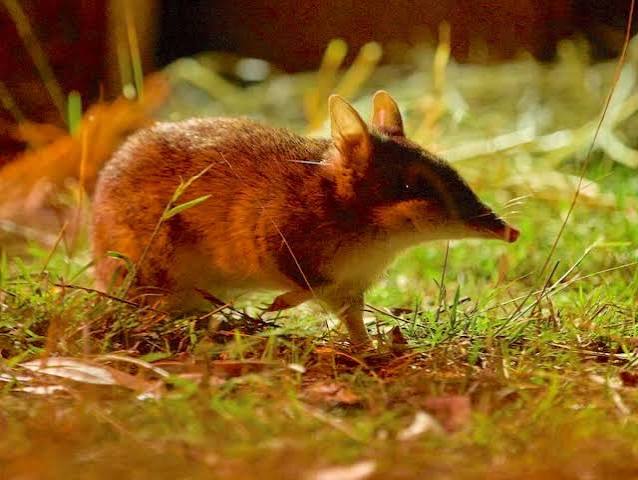
One hundred eastern barred bandicoots have been released on Phillip Island in a major conservation effort to rebuild a species once declared extinct in the wild on mainland Australia.
A small Australian marsupial that was once declared extinct in the wild on mainland Australia has taken another major step towards recovery.
In April 2026, conservationists released 100 eastern barred bandicoots onto Phillip Island, off the coast of Victoria. The release is the largest-ever reintroduction of genetically recovered eastern barred bandicoots into the wild in Australia and represents a major milestone in one of the country’s longest-running threatened-species recovery programs. (amazon.com.au)
The animals were transported from a protected breeding site in western Victoria to Phillip Island in a carefully coordinated operation that took place over approximately 24 hours.
For a species that came dangerously close to disappearing from mainland Australia, the release is a remarkable turnaround.
From Extinct in the Wild to a Second Chance
The eastern barred bandicoot (Perameles gunnii) is a small, nocturnal marsupial found in parts of southeastern Australia.
Historically, the species was widespread across grasslands and grassy woodlands in Victoria and Tasmania. But on mainland Australia, its numbers collapsed dramatically.
The main threats included introduced red foxes, feral cats, habitat loss and changes to the landscape caused by agriculture and grazing. By the late 1980s, fewer than 150 eastern barred bandicoots were thought to remain on the mainland. (dcceew.gov.au)
By 2013, the mainland population was officially considered Extinct in the Wild.
Instead of allowing the species to disappear completely, conservationists moved animals into protected areas and established captive-breeding programs.
Those efforts gave the species a lifeline.
A Conservation Program Decades in the Making
The latest release is the result of years of breeding, genetic research and habitat management.
Since 2004, conservationists have carefully bred eastern barred bandicoots in protected environments. The managed population eventually grew to more than 2,000 animals across safe havens, creating an opportunity to begin rebuilding wild populations. (amazon.com.au)
The 2026 project was led by the Odonata Foundation, Cesar Australia and the Eastern Barred Bandicoot Recovery Team, with support from Phillip Island Nature Parks and other conservation partners.
A key part of the project is genetic rescue.
Rather than simply releasing any available animals, researchers have worked to increase genetic diversity within the managed population. Greater genetic diversity can make populations more resilient to disease, environmental changes and other threats.
The 100 animals released on Phillip Island were therefore not simply a larger population boost. They were part of a deliberate effort to strengthen the species’ genetic health and long-term survival.
Why Phillip Island?
Phillip Island provides an important opportunity because conservationists can manage some of the threats that devastated the species on mainland Australia.
The island already supports an established population of eastern barred bandicoots. The introduction of the 100 new animals is intended to strengthen that population and increase its genetic diversity.
The species has also successfully established populations on nearby islands.
Eastern barred bandicoots were reintroduced to Phillip Island and French Island after disappearing from mainland Australia. These island populations played an important role in preventing the species from being lost entirely. In 2021, the mainland subspecies was reclassified from Extinct in the Wild to Endangered, reflecting the success of conservation efforts. (connectsci.au)
That change was an important conservation milestone.
But it did not mean the species was safe.
Why Genetic Diversity Matters
Saving an endangered species is about more than increasing the number of animals.
If a population becomes very small, it can lose genetic diversity. Closely related animals may be more likely to reproduce with one another, increasing the risk of inherited health problems and reducing the population’s ability to adapt to changing conditions.
This is known as inbreeding.
Genetic rescue programs attempt to address this problem by introducing individuals with different genetic backgrounds into vulnerable populations.
The eastern barred bandicoot project is using this approach to strengthen the wild population on Phillip Island.
Researchers hope the new animals will reproduce with the existing population, increasing genetic diversity over time.
The Bandicoots Are More Important Than They Look
Eastern barred bandicoots may be small, but they play an important role in their ecosystems.
The animals spend much of their time searching through soil and leaf litter for insects and other food. Their digging can disturb the soil, helping with processes such as nutrient cycling, seed dispersal and water movement.
This makes them what conservationists describe as ecosystem engineers.
When species such as bandicoots disappear, the effects can extend beyond the animals themselves.
Restoring them could therefore help restore some of the ecological processes that were lost when their populations collapsed.
Australia’s Predator Problem
The recovery of the eastern barred bandicoot also highlights a much larger problem facing Australia’s native wildlife.
Australia has experienced an exceptionally high rate of native mammal decline and extinction. Introduced predators, particularly red foxes and feral cats, have played a major role.
For small ground-dwelling mammals, these predators can be devastating.
A bandicoot that once lived across large areas of mainland Australia can struggle to survive when its habitat becomes fragmented and predators are present.
That is why many conservation programs rely on predator-free or predator-controlled areas.
But conservationists ultimately face a difficult question: Can these species survive in environments where feral predators still exist?
From Safe Havens to the Wild
For decades, protected areas have acted as insurance policies for endangered Australian mammals.
These safe havens allow conservationists to maintain populations while working on strategies for eventual reintroduction.
The eastern barred bandicoot recovery program is now moving beyond simply keeping the species alive in captivity.
The goal is to establish populations that can live and reproduce in environments that resemble the species’ natural habitat.
Phillip Island provides an important testing ground for that approach.
The 100-animal release is therefore not the end of the recovery program. It is another step towards creating a population that can remain healthy and self-sustaining.
A Broader Conservation Experiment
The eastern barred bandicoot project could have implications beyond one species.
Conservationists around the world are increasingly using techniques such as captive breeding, genetic management, predator control and carefully planned reintroductions to recover threatened wildlife.
The success of these programs depends on more than releasing animals into suitable habitat.
Scientists need to understand the animals’ genetics, behaviour, food requirements, predators and ability to reproduce after release.
They also need to monitor populations for years.
For the eastern barred bandicoot, the 2026 release provides researchers with an opportunity to see whether a genetically strengthened population can establish itself and contribute to the long-term recovery of the species.
The Road Ahead
The release of 100 bandicoots is an extraordinary conservation achievement, but the animals still face challenges.
Researchers will monitor their survival, reproduction, movement and interactions with the existing population. They will also look at whether the genetic diversity of the Phillip Island population improves over time.
Success will not be measured simply by how many bandicoots survive the first few months.
The real goal is a self-sustaining population that remains genetically healthy for generations.
The species’ conservation status also demonstrates why recovery work must continue even after an animal is brought back from the brink.
The eastern barred bandicoot has gone from being considered extinct in the wild on mainland Australia to being classified as endangered an extraordinary improvement, but not the same as being secure.
A Small Animal With a Remarkable Story
The eastern barred bandicoot’s story is a reminder that extinction is not always the final chapter.
Less than four decades ago, the mainland population was reduced to fewer than 150 animals. Years of breeding programs, research and habitat protection have now created an opportunity to restore the species to the wild.
The release of 100 genetically recovered bandicoots on Phillip Island represents one of the biggest steps yet.
For these tiny nocturnal marsupials, the journey from the edge of extinction to a new life in the wild is still unfolding.
But for the first time in decades, their future looks a little less uncertain.
References
Australian Government — Department of Climate Change, Energy, the Environment and Water. “Eastern Barred Bandicoot.” Updated 28 April 2026.
Read the Australian Government species profile
Amazon Australia — Right Now Climate Fund. “Bandicoots, once considered extinct on mainland Australia, take major steps towards life in the wild.” April 2026.
Read the conservation project announcement
Australian Geographic. “How to save a bandicoot.” 14 May 2026.
Read the Australian Geographic feature
Proceedings of the Royal Society of Victoria. “The pivotal role of islands in the conservation of eastern barred bandicoots (Perameles gunnii).” 2026.
Read the scientific paper
Zoos Victoria. “Eastern Barred Bandicoot — Mainland Population.”
Read about the species’ recovery
Odonata Foundation. “Once extinct on the mainland, bandicoots make a feisty return.” April 2026.
Learn more about the 100-bandicoot release
Leave a Reply