

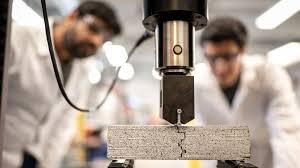
How Nature Is Helping Researchers Create Stronger, Smarter, and More Sustainable Materials
When most people think of technological innovation, they imagine advanced laboratories, artificial intelligence, or cutting-edge machinery.
But some scientists are finding inspiration in a much simpler place: the natural world.
Around the globe, researchers are studying seashells, spider silk, bones, plant structures, and other natural materials to develop new technologies that are stronger, lighter, and more environmentally friendly than many conventional alternatives.
This rapidly growing field, known as biomimicry, is based on a simple idea: nature has spent millions of years solving problems through evolution, and humans can learn from those solutions.
Among the most promising examples is the study of seashells, which are helping scientists develop next-generation materials with extraordinary strength and durability.
The Hidden Engineering of Seashells
At first glance, a seashell may seem fragile.
Yet many shells possess remarkable structural properties that allow them to withstand powerful waves, impacts, predators, and environmental stress.
Scientists have discovered that shells achieve this strength not because of the materials they contain alone, but because of the way those materials are arranged.
Many shells are made from calcium carbonate, a relatively common mineral. However, the microscopic architecture of shell layers creates a structure that is both strong and resistant to cracking.
This combination of strength and toughness has fascinated engineers for decades.
Researchers are now examining how these natural designs can be replicated in human-made materials.
Learning From Nature’s Blueprints
Instead of simply copying natural materials, scientists study the principles behind them.
By understanding how seashells distribute force, resist fractures, and repair damage, researchers can apply similar concepts to new products and technologies.
Some teams are developing construction materials inspired by shell structures that could make buildings more durable while requiring fewer resources.
Others are designing lightweight materials for transportation, aerospace engineering, and protective equipment.
The goal is not only to improve performance but also to reduce environmental impact.
Nature often achieves exceptional results using minimal energy and renewable resources, making it an attractive model for sustainable innovation.
A More Sustainable Future
One of the biggest challenges facing modern industry is finding ways to produce strong materials without generating excessive pollution or waste.
Traditional manufacturing processes often require large amounts of energy and raw materials.
Biomimetic designs could help address this challenge.
Scientists believe that materials inspired by natural structures may offer improved performance while reducing resource consumption.
In some cases, researchers are exploring biodegradable alternatives that could replace certain plastics and synthetic materials.
Others are developing environmentally friendly manufacturing methods based on natural processes.
As concerns about climate change and sustainability continue to grow, innovations inspired by nature are attracting increasing attention from governments, universities, and private companies.
Applications Beyond Construction
The influence of biomimicry extends far beyond building materials.
Researchers are applying lessons from nature across a wide range of industries.
Medical scientists are studying biological structures to improve implants, prosthetics, and tissue engineering.
Engineers are examining bird wings to develop more efficient aircraft designs.
Robotics experts are creating machines inspired by insects, fish, and other animals.
Even renewable energy technologies have benefited from designs based on natural systems.
The principles found in seashells represent just one example of how nature can serve as a source of technological inspiration.
Why Biomimicry Matters
For many years, technological progress was often associated with controlling or overcoming nature.
Today, a growing number of researchers believe that working with nature’s principles may offer a smarter path forward.
Natural systems have evolved over billions of years to maximize efficiency, minimize waste, and adapt to changing environments.
By studying these systems, scientists can uncover solutions that are both innovative and sustainable.
This approach has the potential to address some of the world’s most pressing challenges, including resource scarcity, pollution, climate change, and infrastructure resilience.
Challenges and Opportunities
While the field of biomimicry has made significant progress, many discoveries are still in the research and development stage.
Translating natural designs into large-scale manufacturing can be complex and expensive.
Scientists must often find ways to reproduce intricate biological structures using industrial processes.
However, advances in nanotechnology, 3D printing, materials science, and artificial intelligence are making these challenges easier to overcome.
As technology continues to evolve, researchers are becoming increasingly capable of replicating the sophisticated structures found in nature.
Many experts believe the coming decades could see a rapid expansion in biomimetic technologies.
A New Way of Thinking About Innovation
The growing interest in seashell inspired materials reflects a broader shift in how people think about science and innovation.
Rather than viewing nature as something separate from technology, researchers are increasingly recognizing it as one of the greatest sources of knowledge available.
Every forest, coral reef, desert, and coastline contains organisms that have spent millions of years adapting to survive.
Within those adaptations may lie solutions to some of humanity’s biggest challenges.
The humble seashell, shaped by evolution and refined over countless generations, is now helping scientists imagine a future where technology is not only more advanced but also more sustainable.
Looking Ahead
Although much of this research is still developing, the potential benefits are enormous.
From stronger buildings and safer transportation to greener manufacturing and reduced waste, nature-inspired materials could play an important role in shaping the future.
The story serves as a reminder that innovation does not always come from creating something entirely new.
Sometimes, the best ideas have been hiding in nature all along.
As scientists continue to unlock the secrets of seashells and other natural structures, the future of sustainable technology may be closer than we think.
Leave a Reply