
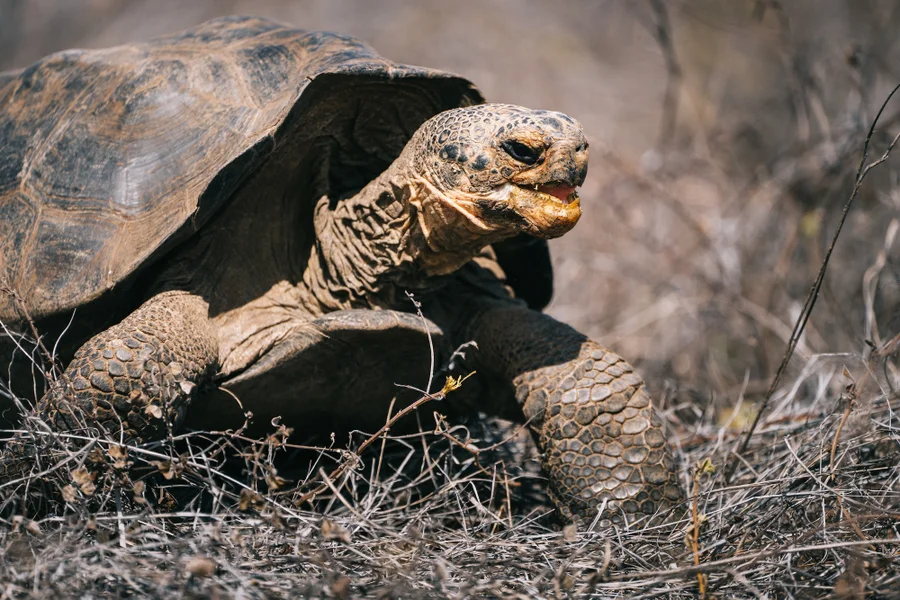
For decades, the Floreana giant tortoise had been considered lost from its native island a symbol of species decline and the devastating impacts of human arrival. But in a remarkable turn of events in early 2026, conservationists and scientists celebrated an extraordinary success: these majestic giants are again roaming free on Floreana Island, nearly 200 years after their disappearance.
A Species Once Lost to History
The Floreana giant tortoise was once endemic to Floreana Island in the Galápagos Archipelago, a place famed for its critical role in Charles Darwin’s development of evolutionary theory. However, during the 19th century, sailors, settlers, and introduced animals ravaged tortoise populations. By the mid‑1800s, they had vanished from their home island entirely.
For many years, the species was presumed extinct until genetic clues unearthed elsewhere in the archipelago offered a glimmer of hope. In 2000, scientists discovered tortoises on nearby Isabela Island whose shells and DNA suggested a connection to the lost Floreana lineage. This unexpected breakthrough opened the door to what conservationists called an unprecedented opportunity.
Breeding Hope Back to Life
Using these genetically linked individuals, a collaborative conservation project began breeding Floreana‑ancestry tortoises in captivity. Over years of careful work involving multiple organisations and local authorities, 158 juvenile tortoises were raised with the specific goal of returning them to their ancestral island.
On 20 February 2026, these young giants were released back into Floreana’s wild landscapes as part of the Floreana Ecological Restoration Project a flagship conservation programme supported by the Galápagos National Park Directorate, Island Conservation, Galapagos Conservancy, Fundación Jocotoco, and the Charles Darwin Foundation.
This release was not merely symbolic: giant tortoises play a keystone ecological role. They are powerful seed dispersers, shaping plant communities and maintaining habitat structure. Their return is expected to jump start the regeneration of ecosystems that had been without these “gardeners of the Galápagos” for generations.
A Triumph for Conservation and Community
Local residents of Floreana Island have welcomed the tortoises’ return, seeing it as both an ecological and cultural milestone. Ecotourism prospects are improving but more importantly, the reintroduction offers a living testament to what sustained conservation can achieve. Scientists emphasise that this project required careful planning, genetic research, and decades of persistence.
“It’s one thing to study species loss, and another to actively reverse it,” conservation biologist Dr. Mariana Pérez said. “The return of the Floreana giant tortoise shows the world that extinction isn’t always final when humans commit to restoration.”
What This Means for Global Biodiversity
This rediscovery and rewilding effort is part of a wider pattern of conservation successes from once‑lost plants found again after centuries, to unexpected animal sightings that give hope to scientists and nature lovers alike. These stories underscore the importance of protecting habitats, restoring ecosystems, and supporting long‑term recovery initiatives around the world.
Most importantly, they remind us that even species pushed to the brink can sometimes make a comeback if we give nature a chance.
Reference List
- Floreana giant tortoise once believed extinct is now roaming free. Scientific American, February 27, 2026 — on the re‑introduction of tortoises to their native island and ecological significance. (Scientific American)
- After Nearly 200 Years, Giant Tortoises Have Returned to a Galápagos Island After Historic Rewilding Efforts. People.com / Yahoo News report, February 2026 — detailed coverage of the restoration project and tortoise reintroduction. (People.com)
- Galápagos tortoise once believed extinct is now roaming free. AOL article, February 27, 2026 — additional perspective on genetic discovery and captive‑breeding success. (AOL)
Leave a Reply