
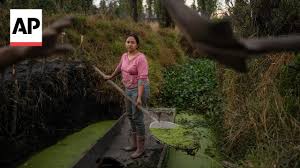
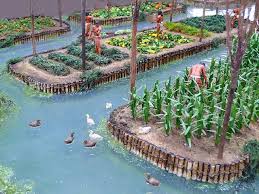
In the canals of Xochimilco, on the southern edge of Mexico City, a remarkable effort is underway to protect and revive one of the most ingenious agricultural systems ever created the Aztec chinampas, often called floating farms. These ancient farms are not just historical curiosities they are functioning ecosystems, sustainable food sources, and a vital link to Mexico’s cultural heritage.
Chinampas are artificial islands built up with layers of mud, vegetation and nutrient‑rich soil in shallow lake beds. Although not literally floating, they form fertile plots surrounded by canals that make irrigation natural and efficient. This technique dates back hundreds of years to before European colonisation and once supplied food to the Aztec capital of Tenochtitlán.
Women Lead a Cultural and Environmental Revival
Traditionally, chinampa farming was passed down through men in farming families. But today, women are stepping into leadership roles, buying and restoring chinampas, and in the process, helping conserve the fragile wetland ecosystem that sustains them. Farmers like Jasmín Ordóñez and Cassandra Garduño are among those revitalising these historic plots with sustainable practices and community collaboration.
Ordóñez returned to San Gregorio Atlapulco after recognizing how severely the chinampas had deteriorated. She cleaned up canals cluttered with garbage and began planting vegetables using traditional methods, insisting that conserving the land is a responsibility shared by all who live there. Garduño who grew up around chinampas uses nutrient‑rich volcanic mud historically prized for its fertilising qualities to grow leafy greens, herbs and flowers while promoting ecological balance.
More Than Food: Protecting Biodiversity and Water
The revival of chinampas goes beyond sustainable agriculture. Experts from the National Autonomous University of Mexico (UNAM) are working with local farmers on projects that purify canal water using aquatic plants and protect native species including the critically endangered axolotl salamander. These ecosystems once provided natural filtration and habitat for diverse wildlife, roles that modern conservation efforts are keen to restore.
Chinampas also play crucial environmental roles:
- They help moderate local temperatures by maintaining green spaces and water flows.
- The canals act as natural water reservoirs, reducing urban heat island effects and moderating floods during rainy seasons.
- The layered planting technique enhances biodiversity, helping crops resist pests naturally.
Challenges and Hope for the Future
Despite these successes, there are ongoing threats. Urban expansion, water pollution, invasive fish species, and the conversion of farmland to non‑agricultural uses have all pushed chinampa cultivation to the brink — only a tiny fraction of the original acreage remains productive. However, local stewards and scientists are optimistic: the steady growth of sustainable farming communities and renewed interest in organic, locally‑grown produce are breathing new life into this ancient system.
“Chinampas are an artificial agro‑ecosystem created to supply food in pre‑Hispanic times and that endures to this day,” says a UNAM biologist involved in the project, pointing to a future where tradition and sustainability walk hand in hand.
References
- Women in Mexico step up to protect the island farms traditionally inherited by men – Associated Press / Mongabay (2025) detailed account of women reviving chinampas and ecosystem efforts. (Mongabay News)
- Ancient Aztec floating gardens and their sustainable farming legacy – explanation of chinampas structure, history and cultural importance. (Wodne Sprawy)
Leave a Reply