
At age 16, Reginald Dwayne Betts was sentenced to nine years in prison. Locked in solitary confinement for part of his time, he endured stark isolation until someone smuggled a copy of Dudley Randall’s The Black Poets into his cell. That simple act changed everything.
That book sparked Betts’s love for literature. It became a lifeline during his incarceration, prompting him to write and eventually pursue higher education. He earned a law degree from Yale and reinvented his life outside prison, but he never forgot how that small gesture of literary kindness reshaped his world.
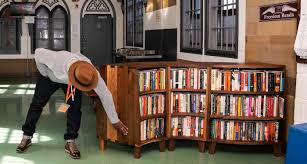
In 2020, Betts founded Freedom Reads, a nonprofit dedicated to installing “Freedom Libraries” inside prisons not token book carts, but engineered, handcrafted bookshelves placed directly within prison cellblocks.
Libraries with Purpose
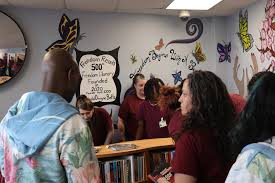
The Freedom Libraries are more than just storage for books they are carefully curated and beautifully crafted. Each library holds around 500 titles, spanning poetry, fiction, non-fiction, memoir, and philosophy. The shelves are handcrafted using salvaged wood by teams that include formerly incarcerated individuals. Their curved design, organizers say, is symbolic: a reminder that “the universe bends toward justice.”
Unlike conventional prison libraries, which are often tucked away behind security checkpoints or have restricted hours, Freedom Libraries are installed in the heart of residential units cellblocks to improve accessibility and foster a sense of community.
Scale and Impact
Freedom Reads has grown rapidly. As of late 2025, the organization has opened 520 Freedom Libraries across 52 adult and youth prisons in 13 U.S. states. In its most recent push, it opened 35 new libraries in Missouri prisons across both male and female facilities.
According to its impact report (2021–2024), Freedom Reads has shipped nearly 227,000 books and served close to 38,000 incarcerated people. The organization’s long-term vision is ambitious: to place a Freedom Library in every cellblock in every U.S. prison.
Beyond the Bookshelves
Betts’s initiative also includes the Inside Literary Prize, a national book award judged entirely by currently incarcerated readers. Through literary circles, readings, and performances, Freedom Reads seeks to open up dialogue, empathy, and connection behind bars.
On several occasions, Betts has returned to prisons even ones where he formerly served time to help install libraries in person. In Virginia alone, his organization opened 32 new libraries in Dillwyn and Buckingham Correctional Centers, reflecting a deeply personal momentum to “show up” in the same places that once confined him.
Why It Matters
- Literary transformation: Betts’s journey shows how access to literature can spark self-reflection, healing, and a renewed sense of purpose.
- Design as dignity: The handcrafted, curved shelves challenge the rigid, dehumanizing aesthetics of prison architecture.
- Community building: Freedom Libraries foster conversation and shared learning among people who rarely get to choose what they read.
- Justice through access: By placing libraries in cellblocks, Freedom Reads asserts that incarcerated people deserve not just books — but beauty, agency, and intellectual space.
Challenges Ahead
Scaling remains a challenge. While 520 libraries is a remarkable milestone, there are thousands more cellblocks nationwide. The organization depends on funding, partnerships with correctional systems, and logistical cooperation to expand.
Moreover, books alone cannot address the structural inequalities and systemic issues within the prison system. But, as Betts argues, literature can humanize it can open doors where few existed before.
Conclusion
Reginald Dwayne Betts transformed his most painful experiences into a force for change. From the rope-and-pillowcase method of smuggling books into solitary, he has built a national movement centered on access, dignity, and hope. In his words: “freedom begins with a book.”
References
- “A smuggled book changed his life. Now he’s built 500 prison libraries.” Washington Post. (The Washington Post)
- Freedom Reads, “Press Kit.” (freedomreads.org)
- Freedom Reads, “Freedom Library” page. (freedomreads.org)
- Freedom Reads, “Impact Report 2021–24.” (freedomreads.org)
- Freedom Reads, “About Reginald Dwayne Betts.” (freedomreads.org)
- Horton, Adrian. “It feels like the start of something: Reginald Dwayne Betts on his groundbreaking prison library project.” The Guardian. (The Guardian)
- Saxon, Jamie. “Author’s Princeton ties bring N.J. its first Freedom Libraries.” Princeton University News. (Princeton University)
- Freedom Reads, “Freedom Reads Opens Freedom Libraries … in New Jersey” press release. (freedomreads.org)
- Freedom Reads, “Freedom Reads Expands Access … Missouri Prisons” press release. (freedomreads.org)
- Freedom Reads, “Freedom Reads Returns to Open Additional Freedom Libraries in Virginia Prisons” press release. (freedomreads.org)
Leave a Reply